Cardzia
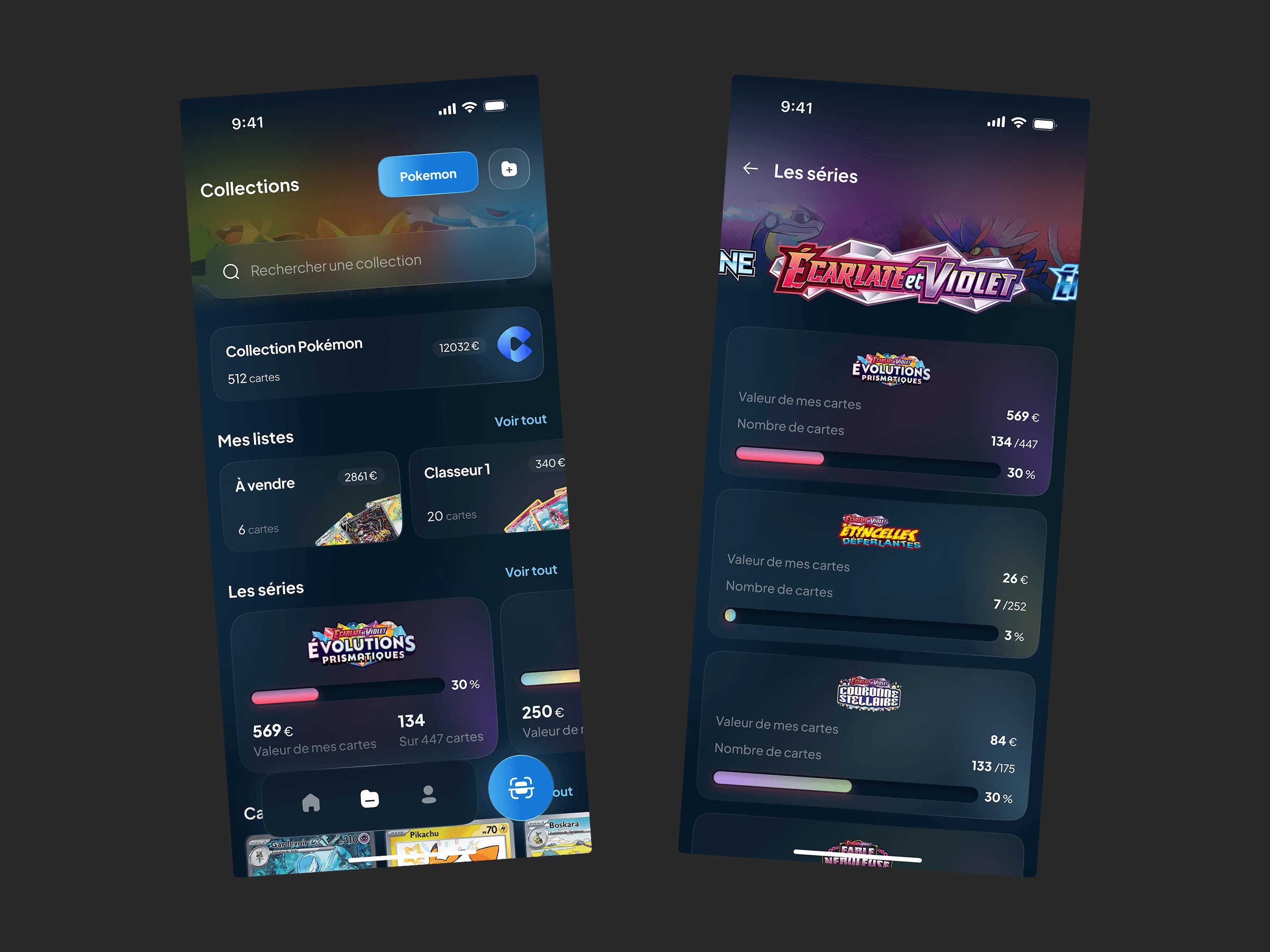
A mobile app for TCG collectors to organize, browse, and grow their collection. The client came in with a clear goal: make something smooth, practical, and enjoyable. Something that actually fits how collectors work in real life.
Client
Role
UI/UX Design
Tools
Figma, Lottie
Project
My role
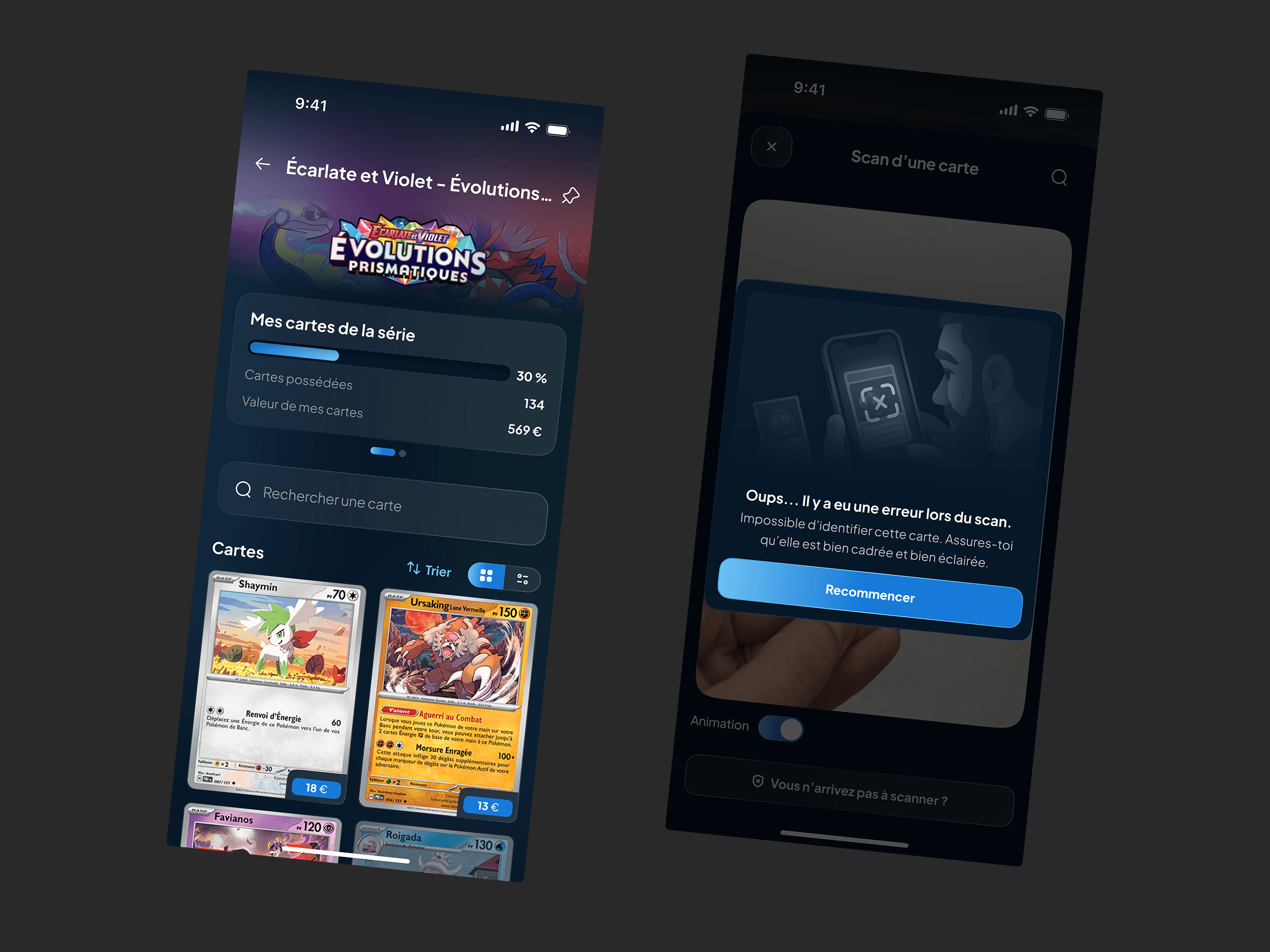
I handled the full design process, from brief to final handoff. That started with a deep dive into the client's needs, a benchmark of existing apps on the market, and mapping out the core user flows: adding cards, browsing the collection, managing lists, searching.
From there I explored two distinct visual directions through moodboards, then refined the chosen one into a complete UI. I ran regular check-ins with the client to validate decisions and iterate based on feedback.
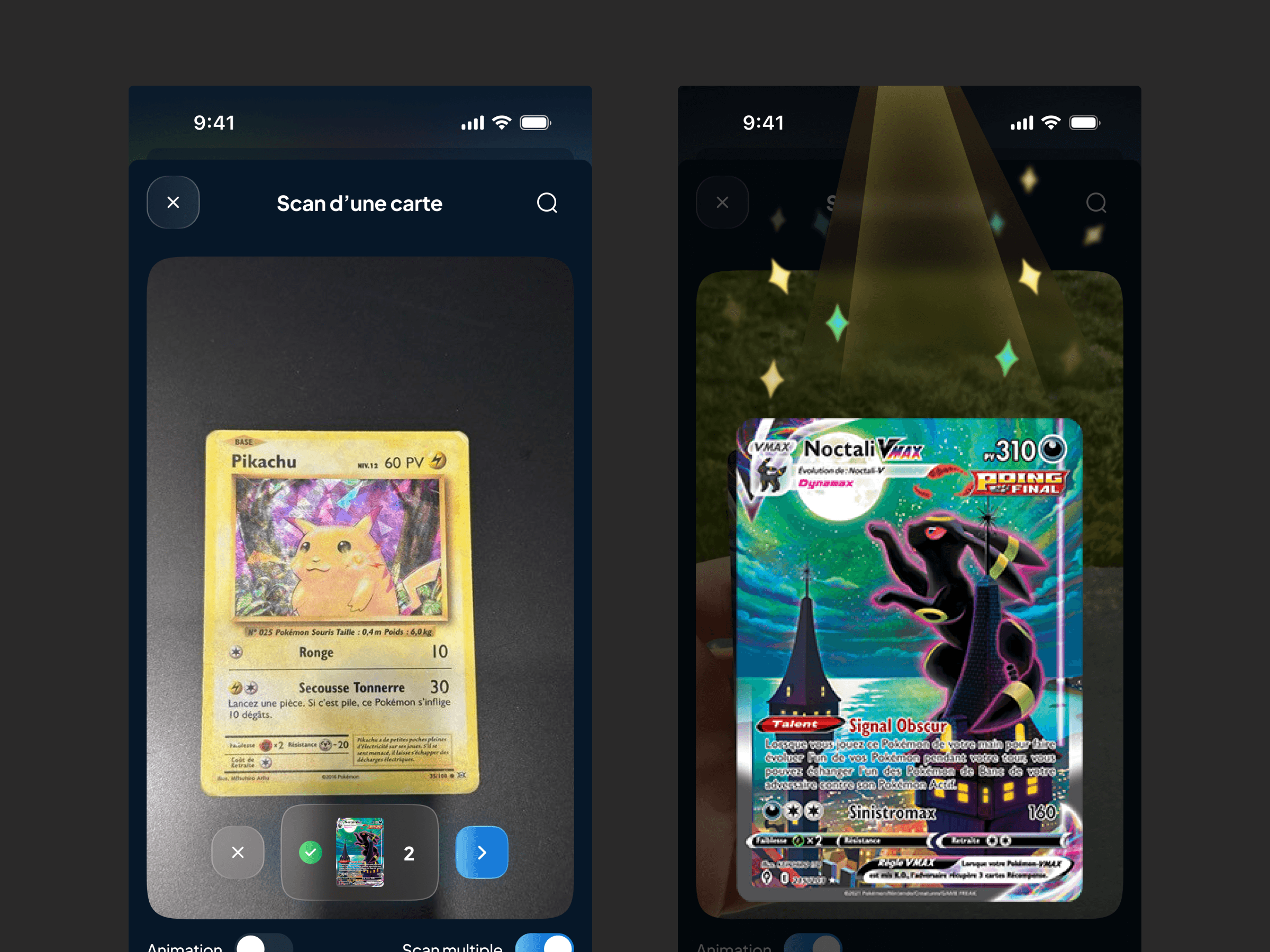
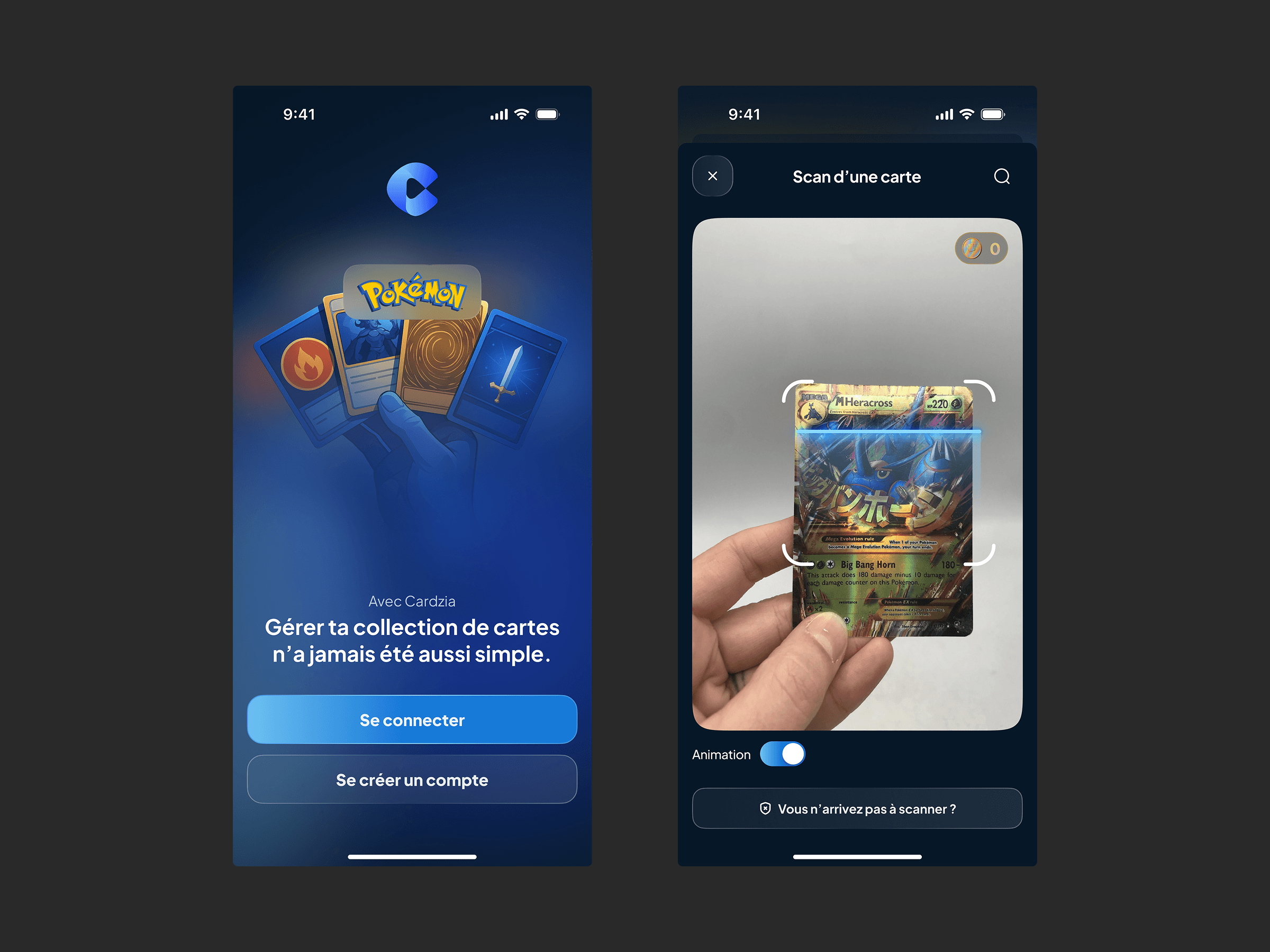
One feature emerged mid-project that became a cornerstone of the experience: multi-card scanning. Real collectors store cards in binders and add them in batches. Once that became obvious, I designed a dedicated flow for it, built around speed and simplicity.
I also proposed a scan animation as a signature interaction. Something that makes the moment of scanning feel satisfying, not just functional. The kind of detail that brings people back.
The final delivery covered all screens, interaction guidelines, and developer-ready specs.
The result
The app launched on the App Store and Google Play. One month in: 22,500 users, 500,000 cards managed in collections. User feedback pointed directly to the things we had designed for: quick card entry, scan and manual input, browsing by series. One early user logged almost their entire collection in under an hour. The visual direction landed too: multiple users called out the UI specifically, and the French-first positioning was flagged as a differentiator in the community.
Beyond the UI, I pushed a product strategy angle: tracking which card games users collect most. That data starts collecting from onboarding and helps the client prioritize content updates and new features. The multi-scan feature is a good example of how the project went overall. It came from real user behavior, surfaced through client feedback, and ended up shaping one of the most important parts of the app.